

uv METALLIZATION
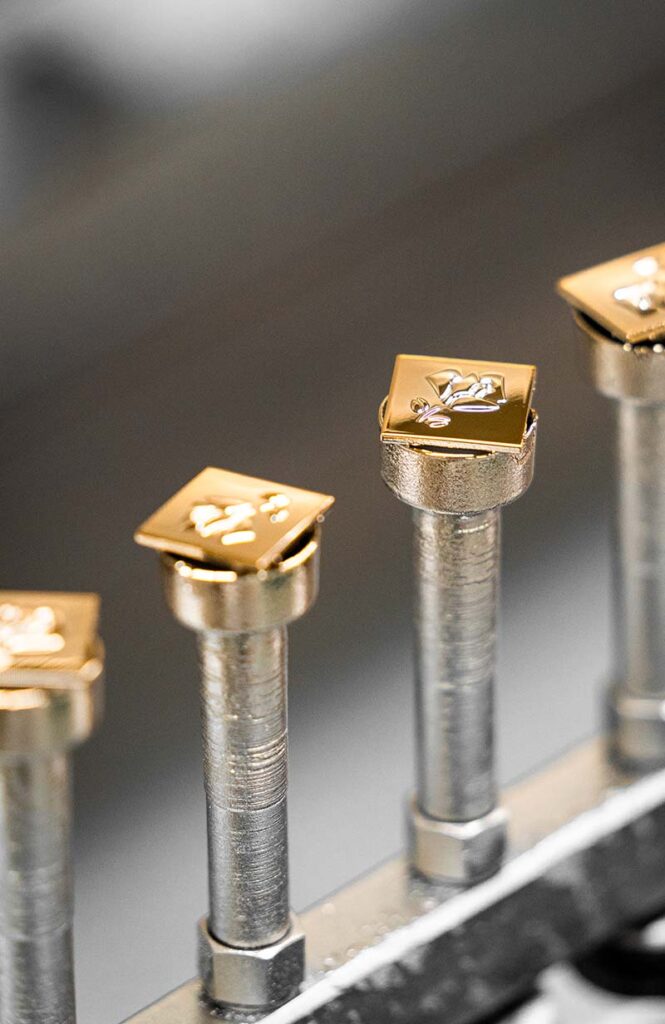
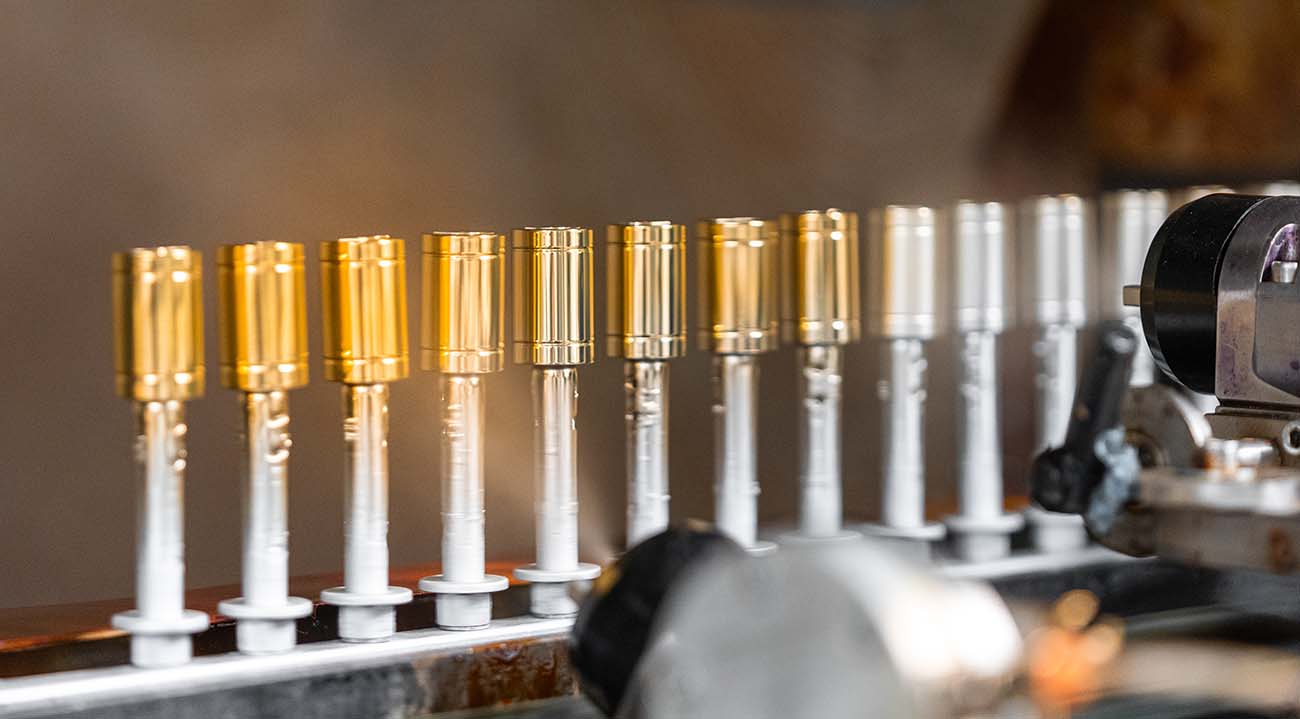
The 9 vacuum metallization lines (7 PVD and 2 Sputtering) are designed for efficiency and quality to guarantee the best value for money for our customers.
The latest generation of metallising machines with “Sputtering” technology has enabled Cosmelux to completely unite the painting and metallising processes.
the BENEFITS
- Excellent chemical resistance (to perfumes, creams, etc.),
- Excellent mechanical resistance (to scratching, abrasion, rubbing...)
- Very high aesthetic quality (due to modern means of production used for processing)
- UV treatment is not performed at high temperatures and therefore allows the size of the workpieces to be maintained (on standard materials)
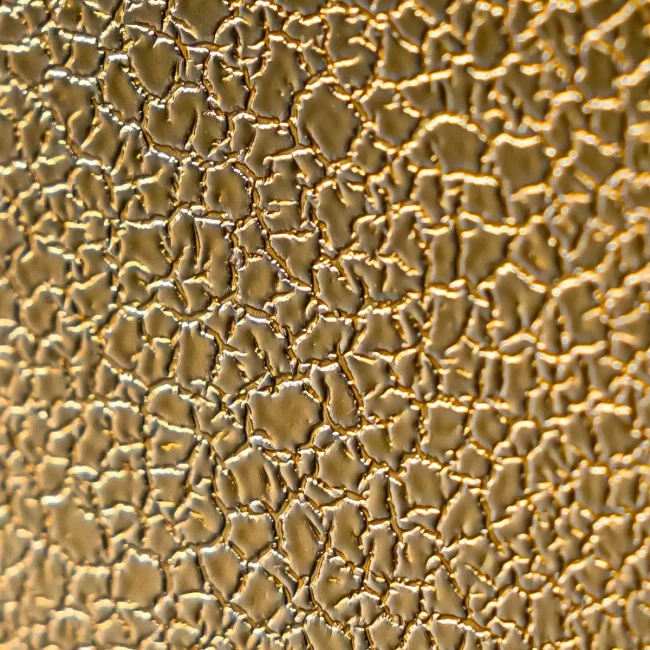
- Possibility of achieving an infinity of colours and 'effects'
- Environmentally friendly: the products used do not contain heavy metals. No solvents are emitted into the atmosphere (we use paints with a high dry residue and burn the solvents with a thermal burner)
- Very elastic paints can be used to maintain the elasticity of the product
- It is possible to use varnishes that can later be decorated by pad printing, screen printing, hot stamping or laser printing.
Production capacity
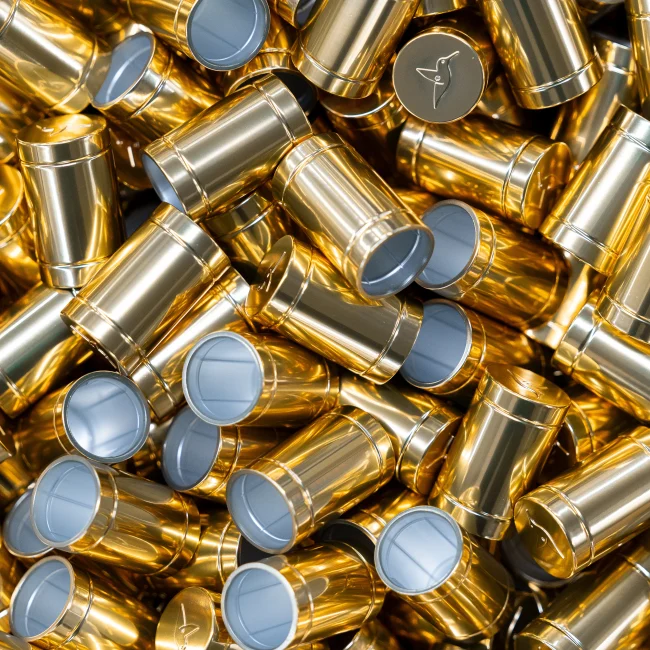
Production capacity for standard size parts: 2,000,000 parts per day.
Type of negotiable parts
Diameter: 5 - 120 mm | Height: 5 - 140 mm
Materials: PP, ABS, PCTA, PE, PETG, PS, SAN, Alu, glass, Surlyn
Company Certifications
DIN ISO 9001:2015
pvd | Thermal evaporation plants
In the field of decorative metallisation, the adoption of thermal evaporation systems is still the most widespread system today due to its simplicity of use and its deposition efficiency in the presence of substrates with very complicated geometries.
The deposition source consists of tungsten resistors, generally placed in the centre of the process chamber, on which the wire of the metal to be deposited is placed. Substrates are positioned around the resistors and are rotated (rotation and translation) during the metal deposition phase.
In order to achieve metal deposition within the process chamber, it is necessary to reach a vacuum level generally higher than 4×10⁻⁴ mbar (high vacuum). Once the necessary vacuum level is reached, the actual evaporation phase begins, which consists of heating the tungsten heating elements, which are made incandescent and melt the metal, which evaporates and condenses on the surface of the substrate.
pvd | Sputtering
A modern, fast and inexpensive metal deposition system originally used only on substrates with flat surfaces, it is now increasingly used on three-dimensional objects as well, even with simple geometries.
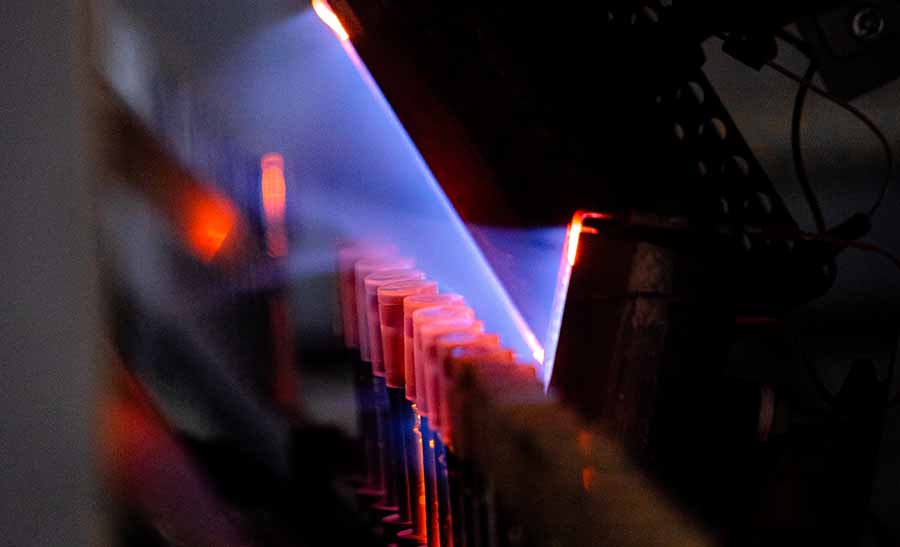
In sputtering technology, the deposition source is a magnetic cathode on which a metal plate (target) of the desired material is placed.
The magnetic cathode is generally placed at the side of the process chamber. The substrates rotate in front of the deposition source. When the desired vacuum level is reached, a high voltage is applied and Argon is injected.
The positive Argon ions undergo an acceleration process on the negative cathode and subsequently eject the atoms from the metal plate. These atoms then condense on the substrates.

- Address Via Del Dosso 1 | 20841 Carate Brianza (MB)
- Phone +39 0362 8000 88
- Email info@cosmelux.it
Disclosure requirements for public disbursements: State aid and de minimis aid received by our company are contained in the National State Aid Register under Art. 52 of Law 234/2012′ and can be consulted at the following link by entering the tax code of your company as a search key in the field FISCAL CODE.
Copyright 2025 Cosmelux. All rights reserved.